Reversi Strategy: Why Corners Matter More Than Discs
By the CrazyArcade team ·
The natural instinct in Reversi is to flip as many discs as possible on every move. Strong players do almost the opposite. A large disc count in the middle of the game means little, because discs can flip back. What matters is which discs can never flip again and how many moves each player has left.
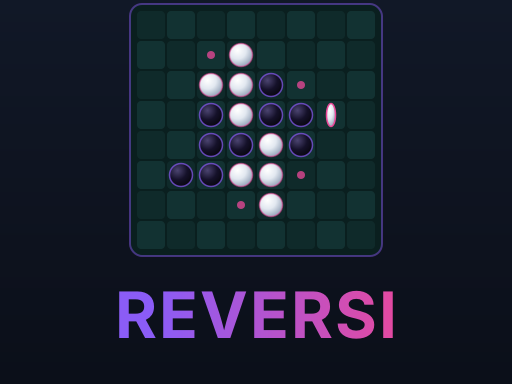
Our own Reversi game shows every legal move as a dot and keeps a live disc count, which makes it easy to see these ideas in action.
Take the corners
A disc in a corner can never be flipped, because no line can surround it. Corners also become anchors: discs along the edge next to a corner you own often become permanent too. Winning games often come from one or two corners taken in the middle of the game.
Avoid the squares next to empty corners
The three squares touching each corner are dangerous while that corner is still empty. The diagonal square next to the corner is the worst, because placing a disc there often gives your opponent the corner on the next move. Leave those squares alone unless the corner is already taken or you have no other choice.
Play for mobility, not disc count
Mobility means the number of legal moves you have. If you keep your discs few and grouped in the centre, your opponent has fewer moves, and eventually they are forced to play onto bad squares, such as the ones next to the corners. Quiet moves that flip just one or two inner discs are often stronger than big flips that open new lines for the other side.
The hint dots help here: before you move, see how many dots the other side would have after your move. Fewer is usually better.
Count at the end
Disc count only becomes the main goal in the last ten to fifteen moves, when the board is nearly full and most discs are stable. At that point, think about parity: try to make the last move in each empty region of the board. When a player has no legal move, the turn passes, and forcing a pass can give you two moves in a row.