Chess for Beginners: How to Stop Losing Pieces and Win Your First Games
By the CrazyArcade team ·
Most beginner chess games are not decided by deep plans. They are decided by a piece left where it can be taken for free. If you remove those mistakes from your own games and learn to punish them in your opponent's, you will beat most casual players and the Easy level of almost any chess program.
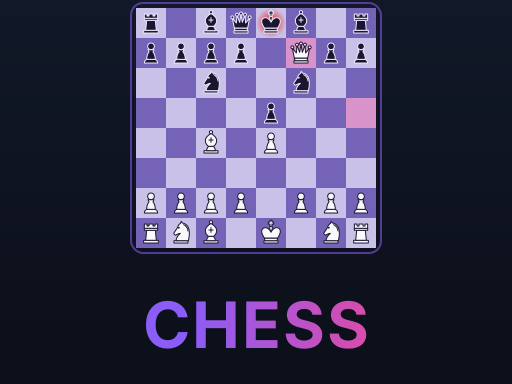
We use our own Chess game for the examples. It follows the full rules, including castling, en passant and promotion, shows legal moves as dots and lets you undo moves, which makes it a good place to practise the habits below.
Three rules for the opening
In the first ten moves, aim for three things. Put a pawn or two in the centre, usually with e4 or d4. Bring out your knights and bishops toward the middle of the board instead of moving the same piece twice. And castle early, which tucks your king behind pawns and brings a rook toward the centre.
Avoid bringing the queen out early. It feels strong, but the other side can chase it with knights and bishops while developing them at the same time, and you lose several moves running away.
The safety check before every move
Before you move, ask two questions. What did my opponent's last move attack? And after my move, is any of my pieces left undefended where it can be taken? This check takes a few seconds and prevents most lost games at beginner level.
Then look at it from the other side: are any of the opponent's pieces undefended? On Easy, the computer only looks one move ahead and leaves pieces hanging now and then, so this is where your first wins come from.
Know what the pieces are worth
A common guide is pawn 1, knight 3, bishop 3, rook 5 and queen 9. Trading a knight for a rook is a good deal; trading a rook for a knight usually is not. Our Chess shows who is ahead in material in the side panel, which helps you see whether a trade worked out.
When you are ahead in material, trade pieces. A one-piece advantage becomes easier to convert as the board empties, because the stronger side has fewer pieces to worry about.
Learn two checkmates
Many beginner games are won on material and then drawn because the stronger side cannot finish. Learn the king and queen checkmate and the king and rook checkmate. In both, you use your piece to fence the enemy king toward the edge of the board, then bring your own king close to help deliver mate.
Watch out for stalemate. If the other king has no legal move and is not in check, the game is a draw. When you have a queen against a lone king, always leave the king at least one square to move to until the final blow.
How to practise
Play Easy until you win most games, then move up to Medium, which searches a few moves deeper. After each loss, use the move list to find the moment the game turned. It is often a single move where a piece was left undefended, and spotting that pattern once makes you much less likely to repeat it.