Sudoku Techniques: From Easy Puzzles to Hard Ones
By the CrazyArcade team ·
Every proper Sudoku puzzle has exactly one solution, and it can be reached by logic alone. If you find yourself guessing, it usually means there is a technique you have not used yet, not that the puzzle needs luck.
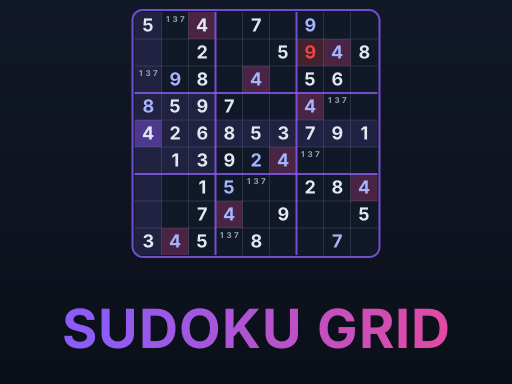
Our Sudoku Grid builds each puzzle in your browser and checks that it has one answer. Easy starts with about 40 numbers, Medium about 30 and Hard often 22 to 26, so you can move up step by step as the techniques below become natural.
Scan for hidden singles first
Pick a number, say 5, and look at every 3x3 box. In each box without a 5, check which cells are blocked by a 5 in the same row or column. If only one cell is left, the 5 goes there. Repeat for each number from 1 to 9. On Easy puzzles, this one technique often solves the whole grid.
Sudoku Grid highlights every cell holding the selected number, which makes this scan much faster: select a 5 and the blocked rows and columns stand out.
Look for naked singles
Now look at single cells instead of single numbers. For a given cell, cross out every number already in its row, column and box. If only one number is left, that is the answer. This technique is especially useful in crowded rows where most numbers are already placed.
Use pencil marks on harder puzzles
On Medium and Hard puzzles, the easy scans eventually stop working. That is the time to write candidates: small pencil marks for every number a cell could still hold. Notes mode in Sudoku Grid does this without cluttering the board.
Write candidates for one box or row at a time rather than the whole grid at once. When you place a number, remove it from the notes in the same row, column and box, and new singles will often appear right away.
Pairs and pointing
If two cells in the same row, column or box can only hold the same two numbers, for example 3 and 7, then those two numbers must go in those two cells. You can remove 3 and 7 from every other cell in that unit. This is called a naked pair, and it unlocks many Hard puzzles.
Pointing is another quick win. If, inside one box, a number can only go in cells that share a single row, then that number cannot appear anywhere else in that row outside the box.
A good order to work in
Hidden singles, then naked singles, then pencil marks, then pairs and pointing, then back to singles. Each placed number makes the earlier techniques work again, so cycling through them is faster than staring at one hard spot. If a number turns red in Sudoku Grid, it does not match the solution, so stop and recheck the row, column and box before going further.