Backgammon for Beginners: Opening Moves, Hitting and Bearing Off
By the CrazyArcade team ·
Backgammon mixes luck and skill. The dice decide what you can do on each turn, but over many games the player who makes better choices with those dice wins much more often. Most of those choices come down to one question: which checkers are safe, and which can be hit?
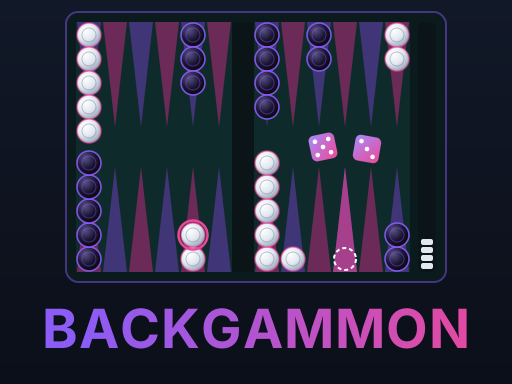
We use our own Backgammon game for the examples. It shows the pip count for both sides, highlights legal targets and lets you undo before you press Done, which is perfect for comparing two possible moves.
Make points, avoid blots
A point with two or more of your checkers is safe: your opponent cannot land there. A single checker, called a blot, can be hit and sent to the bar. Early in the game, try to use your rolls to make new points, especially in your home board and on the point just outside it.
Some opening rolls are known to be strong because they make a point right away. A 3-1, for example, makes your 5-point, one of the most valuable points on the board.
When to hit
Hitting an enemy blot sends it back to the start and costs your opponent a lot of distance. It is usually right, especially when the blot is far along the board. The exception is when hitting leaves several of your own blots exposed in your home board, where being hit back would cost you a lot.
A checker on the bar must re-enter before anything else can move. The more points you hold in your home board, the harder that is for your opponent.
Use the pip count
The pip count is the total number of points each side still has to move. If you are well ahead, play a running game: move your back checkers home safely and avoid contact. If you are behind, you need contact and hits to catch up, so keep some checkers back where they might hit.
Bearing off safely
Once all 15 checkers are in your home board, you can start bearing off. If your opponent still has checkers behind you, the goal is to bear off without leaving a blot they can hit. Clear points from the back of your home board first and keep an even number of checkers on each point when you can.
When there is no contact left, simply bear off as many checkers per roll as possible. Doubles are played four times, so they are the fastest way to finish.